

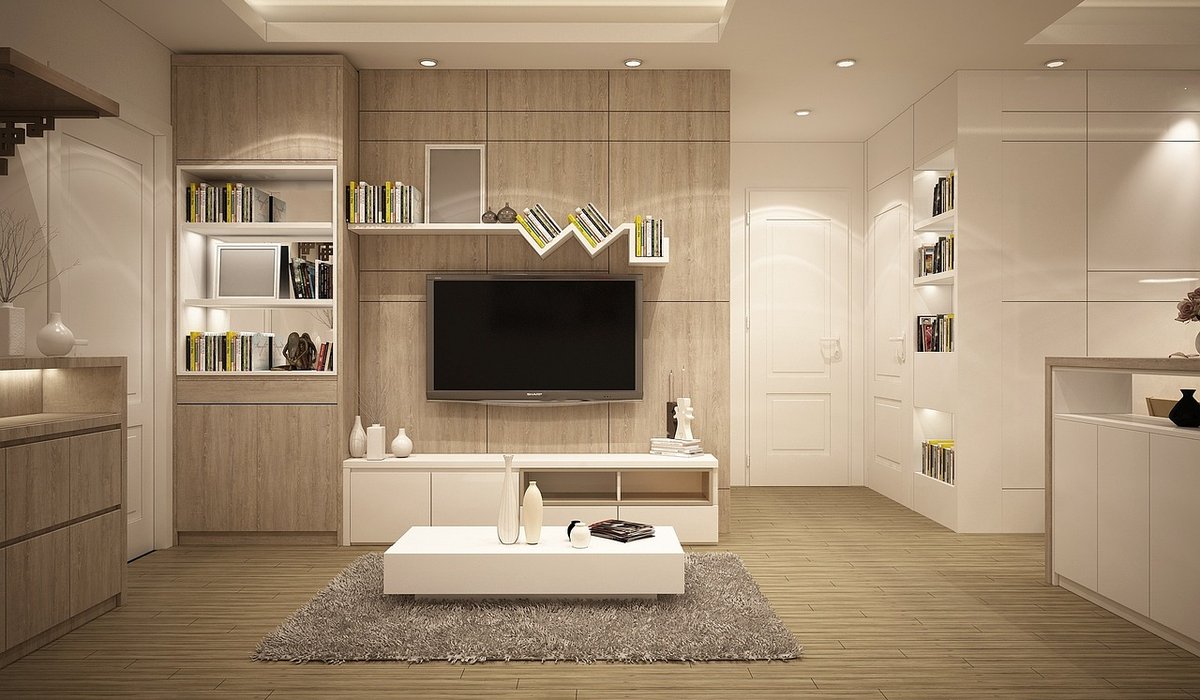
Why damage-free decorating protects your deposit
Renting in the UK often means magnolia walls, a beige carpet, and a tenancy agreement that asks you not to make alterations without written permission. It doesn't mean you have to live in a blank box for the length of your lease. There is a whole family of wall decor methods designed to come away cleanly, leaving nothing behind but the paint you started with.
It helps to understand what your deposit actually protects. Most deposits are held in a government-approved protection scheme, and any deduction has to be justified as more than fair wear and tear. A couple of small picture hooks are usually easy to argue about; a torn patch of plaster or a strip of ripped wallpaper is not. So the goal isn't just "no nails" — it's reversible decorating. Choose methods you can undo in an afternoon, take photos of the walls when you move in and when you leave, and you'll be in a strong position whatever happens.
Before you begin, have a quick look at your tenancy agreement and, if your landlord seems approachable, send a short message describing what you'd like to do. Most people respond well to a renter who asks first. You'll also have written consent if anything is ever questioned later.
Adhesive hooks and strips: the workhorses of rental walls
Removable adhesive hooks and picture strips are the first thing most renters reach for, and rightly so. Modern versions hold far more than people expect, but they only work if you prepare the surface properly. Get that right and they'll hold a framed print, a mirror or a string of fairy lights for years, then lift off without a mark.
- Clean and dry the wall first. A wipe with warm soapy water, then a minute to dry, removes the dust and cooking grease that cause most failures.
- Wait after painting. Fresh emulsion can take up to four weeks to cure. Sticking anything to it too soon can lift the paint when you remove it.
- Press firmly for at least 30 seconds, then leave the strip for an hour before hanging anything on it.
- Respect the weight limit and use two hooks for anything wide. A 1–2 kg hook is for a light frame; anything heavier needs a large strip rated for it, or a different method entirely.
- Avoid porous or flaky surfaces. Adhesive strips struggle on bare plaster, lining paper and textured finishes.
If you're nervous, test one hook behind a wardrobe or a sofa for a fortnight before committing to a whole gallery wall.
Removable wallpaper and peel-and-stick panels
Removable wallpaper has quietly become one of the best rental upgrades around. A single feature wall behind a bed, a strip inside an alcove, or a run of peel-and-stick panels behind a desk can transform a room in an afternoon and come down in twenty minutes.
The catch is surface preparation. Peel-and-stick papers adhere best to smooth, satin or eggshell finishes. They cling badly to matt emulsion, lining paper, and anything with texture, and they can pull away weak or flaking paint. Test a small square in a hidden corner for a week before you commit to a whole roll. Warm the wall slightly, apply slowly, and smooth out bubbles with a felt-edged squeegee as you go. When it's time to leave, warm the paper gently with a hairdryer and peel it back at a low angle rather than straight out from the wall.
Leaning shelves and freestanding displays
Not every wall display needs to touch the wall at all. Leaning ladder shelves, freestanding bookcases arranged on a diagonal, and tall mirrors propped in a corner are all entirely reversible — you simply carry them to your next place. They suit period flats with uneven walls and wonky skirting, where anything requiring a level surface is a losing battle.
Use them thoughtfully. Style a leaning shelf with framed prints at the top, a plant or two in the middle, and books at the base, so it reads as deliberate rather than temporary. For safety, keep freestanding units away from doorways and children's play areas, and use the anti-tip straps that come with them — most can be fixed using an adhesive pad rather than a screw, which keeps them landlord-friendly.
In rented bathrooms, tension poles and over-door hangers offer the same principle: storage and display with no fixings at all.
Frames without nails: ledges, rails and low-tack tape
Picture ledges are a renter's best friend. Fix one to the wall with adhesive strips, or simply rest it on a piece of furniture, then lean frames against it. You can rearrange the display whenever the mood takes you, and nothing is ever hung from a single point.
For lighter items, a length of low-tack decorative tape can act as a mini rail for postcards and prints, and a thin tension wire strung between two adhesive hooks makes a surprisingly sturdy gallery line for lightweight frames. Keep the load small, and remember that direct sunlight will eventually make any tape brittle.
Removal day: leaving the wall as you found it
When your tenancy ends, don't rush the removal. Warm each adhesive strip with a hairdryer on a low setting, then pull the tab slowly downwards, keeping it close to the wall and stretching it lengthways rather than yanking outwards. This is the single technique that prevents most paint damage.
Any sticky residue will lift with warm soapy water or a little white spirit on a cloth. If a small patch does come away, a tester pot of colour-matched paint and a fine roller will usually make it invisible. Do this a week before the check-out inspection, not the morning of, and you'll hand back a flat that looks exactly as it did on day one — with your deposit intact and your personality still very much in evidence.


Coding is used in almost all aspects of life and work now, be it directly or indirectly. It’s not just for companies in the tech sector. “An increasing number of businesses rely on computer code,
Coding is used in almost all aspects of life and work now, be it directly or indirectly. It’s not just for companies in the tech sector. “An increasing number of businesses rely on computer code,
Coding is used in almost all aspects of life and work now, be it directly or indirectly. It’s not just for companies in the tech sector. “An increasing number of businesses rely on computer code,